Welcome STARK TOUCH DEVICE!


Solutions
Remote monitoring capability of industrial control computers
Remote Monitoring Capabilities of Industrial Control Computers
Industrial control computers (ICCs) play a pivotal role in managing automated processes across sectors like manufacturing, energy, and transportation. Their ability to enable remote monitoring allows operators to oversee operations from centralized locations, reducing the need for on-site presence and improving response times to emerging issues. This capability enhances efficiency, safety, and cost-effectiveness by facilitating real-time data access, diagnostics, and control adjustments across distributed systems.
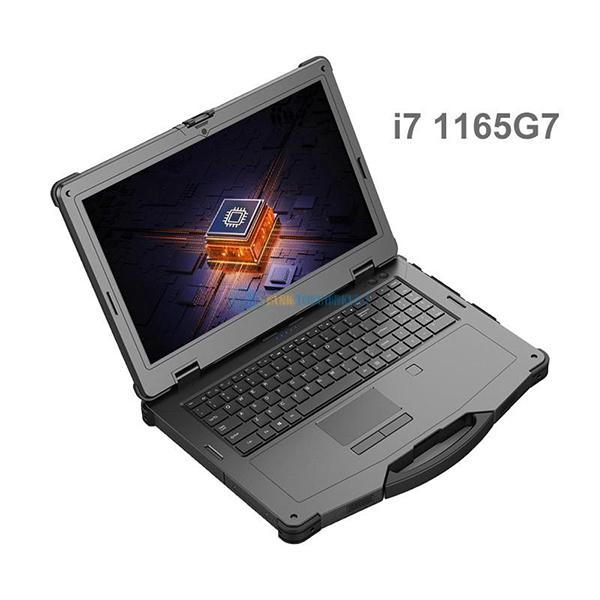
Secure Communication Protocols for Remote Access
Encrypted Data Transmission
Remote monitoring relies on secure channels to prevent unauthorized access or data tampering. Industrial control computers use encryption standards like TLS (Transport Layer Security) or VPNs (Virtual Private Networks) to safeguard data transmitted between field devices and central monitoring stations. For example, encrypted Modbus TCP/IP connections ensure that sensor readings or control commands remain confidential, even over public networks.
Advanced authentication mechanisms, such as multi-factor verification or digital certificates, add layers of security by confirming the identity of users or devices before granting access. This prevents cyberattacks like spoofing or man-in-the-middle exploits, which could disrupt operations or compromise sensitive data.
Redundant Communication Pathways
To ensure reliability, ICCs support multiple communication pathways, including wired Ethernet, wireless cellular networks, or satellite links. Redundancy allows the system to switch to backup channels if the primary connection fails due to network outages, physical damage, or interference. For instance, a factory might use both fiber-optic Ethernet and 4G LTE to monitor critical machinery, ensuring uninterrupted data flow even if one network goes down.
Protocol-agnostic designs enable ICCs to integrate with diverse industrial networks, from legacy serial connections to modern IoT platforms. This flexibility simplifies upgrades and ensures compatibility with existing infrastructure, reducing deployment costs and downtime.
Real-Time Data Acquisition and Visualization
High-Frequency Sampling and Edge Processing
Remote monitoring systems capture data from sensors, actuators, and PLCs at high frequencies to track dynamic processes accurately. Industrial control computers process this data locally (at the edge) to filter noise, normalize units, or calculate derived metrics (e.g., average temperature over a shift). Edge processing reduces latency by avoiding constant data transfers to cloud servers, enabling faster decision-making.
For example, an ICC monitoring a power grid might sample voltage levels every millisecond, detect transient spikes, and trigger alerts before they escalate into outages. Local storage buffers ensure no data is lost during temporary network disruptions, with synchronized uploads once connectivity is restored.
Customizable Dashboards and Alerts
Operators access remote data through intuitive dashboards that display key performance indicators (KPIs), trends, and alarms in real time. These interfaces can be tailored to specific roles, such as plant managers (who focus on overall efficiency) or maintenance technicians (who prioritize equipment health). Visual elements like color-coded gauges, historical charts, and geographic maps help users quickly identify anomalies.
Alerting systems notify stakeholders via email, SMS, or push notifications when thresholds are breached, such as a motor overheating or a tank level reaching critical capacity. Escalation protocols ensure urgent issues are addressed promptly, with automated workflows routing alerts to the appropriate team or triggering pre-defined responses (e.g., shutting down a line).
Historical Data Analysis and Predictive Insights
Remote monitoring platforms store historical data in scalable databases, enabling trend analysis and predictive maintenance. By applying machine learning algorithms to past performance, ICCs can forecast equipment failures or process inefficiencies before they occur. For instance, analyzing vibration patterns from a pump over months might reveal early signs of bearing wear, allowing scheduled maintenance instead of costly emergency repairs.
Historical data also supports compliance reporting by generating audit trails of operational parameters, modifications, or incidents. This documentation is invaluable for industries subject to regulatory standards like ISO 50001 (energy management) or OSHA (occupational safety).
Remote Configuration and Control
Over-the-Air Updates and Parameter Adjustments
Industrial control computers allow operators to modify system settings remotely, such as tuning PID loops, updating firmware, or recalibrating sensors. Over-the-air (OTA) updates streamline maintenance by eliminating the need for physical access to each device, especially in hazardous or hard-to-reach locations like offshore platforms or mining tunnels.
Before applying changes, ICCs validate configurations against predefined rules to prevent errors that could destabilize processes. For example, adjusting a conveyor belt’s speed remotely might trigger safety checks to ensure downstream equipment can handle the new throughput.
Device Management and Inventory Tracking
Remote monitoring systems maintain an inventory of connected devices, including their firmware versions, IP addresses, and operational status. This centralized view simplifies asset management by identifying outdated components, misconfigured units, or unauthorized additions to the network. Operators can group devices by location, function, or criticality to streamline monitoring and troubleshooting.
For instance, a water treatment plant might tag all pH sensors as “critical” and prioritize their calibration schedules, while flagging obsolete flow meters for replacement. Automated discovery tools scan the network periodically to detect new devices, ensuring the inventory stays current without manual updates.
Collaborative Troubleshooting and Expert Support
Remote access enables multiple stakeholders to collaborate on issue resolution, even across geographical boundaries. A field technician encountering an unfamiliar error can share live screenshots or logs with engineers at headquarters, who can guide repairs in real time. This reduces mean-time-to-repair (MTTR) by leveraging collective expertise without travel delays.
Some ICCs integrate with augmented reality (AR) tools, allowing remote experts to overlay instructions onto the technician’s field of view via smart glasses or tablets. For example, guiding the replacement of a circuit board by highlighting connectors or displaying torque specifications visually.
By combining secure communication, real-time analytics, and remote control capabilities, industrial control computers empower organizations to manage complex operations efficiently from anywhere. These features minimize downtime, optimize resource allocation, and enhance safety, making remote monitoring indispensable for modern industrial automation.