Welcome STARK TOUCH DEVICE!


Solutions
Data storage scalability of industrial control computers
Scalability of Data Storage in Industrial Control Computers
Industrial control computers (ICCs) are tasked with managing vast amounts of operational data generated by sensors, machinery, and automation systems. As industrial processes grow in complexity and volume, the ability to scale storage capacity efficiently becomes critical. Scalable data storage ensures ICCs can accommodate increasing data loads without performance degradation, supporting long-term operational continuity and analytical needs. This guide explores strategies for expanding storage in ICCs, addressing hardware flexibility, software integration, and future-proofing considerations.
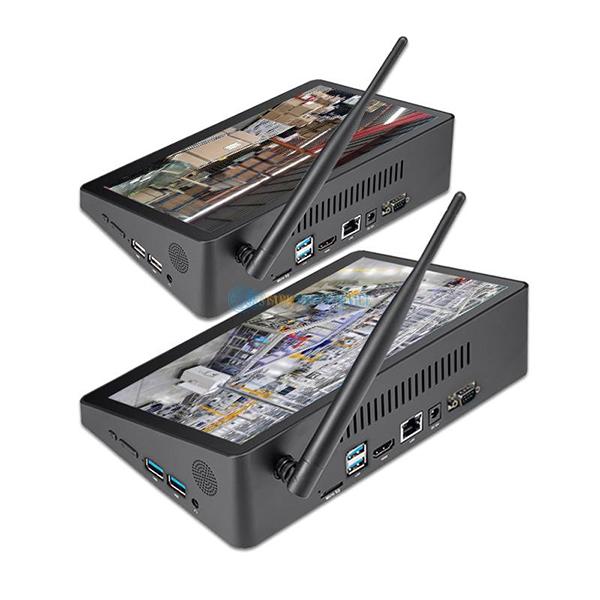
Flexible Hardware Architectures for Storage Expansion
Modular Design with Hot-Swappable Components
Industrial control computers often adopt modular chassis designs that allow users to add or replace storage drives without shutting down the system. Hot-swappable bays for HDDs, SSDs, or NVMe drives enable seamless capacity upgrades, minimizing downtime during maintenance. For example, a factory monitoring system might start with a single 2TB SSD and later expand to 8TB by adding three additional drives, all while the ICC continues processing real-time data.
Modularity also supports mixed storage configurations, such as pairing high-speed SSDs for frequently accessed data (e.g., control logs) with larger HDDs for archival storage (e.g., historical trends). This tiered approach optimizes cost and performance, ensuring critical data remains accessible while reducing wear on expensive components.
Support for Multiple Storage Interfaces
To accommodate diverse storage technologies, ICCs integrate multiple interfaces like SATA, SAS, and PCIe. SATA is cost-effective for bulk storage, while SAS offers higher throughput and reliability for mission-critical applications. PCIe-based NVMe drives deliver ultra-low latency, making them ideal for time-sensitive tasks like edge analytics or predictive maintenance.
By supporting these interfaces, ICCs can leverage advancements in storage media without requiring complete hardware overhauls. For instance, a system initially using SATA SSDs can later incorporate NVMe drives via PCIe slots, boosting read/write speeds as data demands escalate.
External Storage Connectivity Options
Beyond internal expansion, ICCs provide external connectivity options such as USB 3.x, eSATA, or Thunderbolt to attach additional storage arrays. These ports enable quick integration of portable drives for temporary data transfers or connection to network-attached storage (NAS) devices for centralized archiving.
External storage is particularly useful for scenarios requiring rapid scalability, such as temporary data surges during peak production periods. A power plant might use external drives to capture high-resolution vibration data from turbines during inspections, then archive the files to internal storage once analysis is complete.
Software-Level Storage Management and Optimization
Dynamic Volume Management and RAID Configurations
Software tools within ICCs allow administrators to create, resize, or migrate storage volumes dynamically, adapting to changing data requirements. For example, a volume storing daily production logs might be expanded monthly as the dataset grows, while unused space from retired projects is reallocated to active tasks.
RAID (Redundant Array of Independent Disks) configurations enhance data reliability and performance. RAID 1 mirrors data across two drives for fault tolerance, while RAID 5 stripes data with parity across multiple drives, balancing speed and redundancy. Advanced ICCs support nested RAID levels (e.g., RAID 10) or software-defined RAID, enabling custom setups tailored to specific workloads.
Data Deduplication and Compression
To maximize storage efficiency, ICCs employ deduplication and compression algorithms that reduce redundant data. Deduplication identifies and eliminates duplicate files or blocks, such as identical sensor readings captured across multiple devices. Compression shrinks file sizes by encoding repetitive patterns, freeing up space for new data.
For instance, a manufacturing ICC monitoring 100 identical machines might store raw sensor data at 10GB per day. With deduplication, this could drop to 2GB by recognizing that 80% of the readings are identical across machines. Compression might further reduce this to 1GB, extending storage lifespan without adding hardware.
Automated Storage Tiering and Archiving Policies
Intelligent storage management systems classify data based on access frequency, age, or criticality, then move it between storage tiers automatically. Frequently used data remains on high-performance SSDs, while infrequently accessed archives migrate to slower, cheaper HDDs or cloud storage. This tiering ensures optimal resource utilization without manual intervention.
Archiving policies can also be set to transfer data older than a specified period (e.g., one year) to external repositories, preserving internal storage for active operations. For example, a water treatment plant might archive monthly water quality reports to a NAS device, keeping only the last three months’ data on the ICC for real-time monitoring.
Future-Proofing Storage for Long-Term Scalability
Compatibility with Emerging Storage Technologies
Industrial control computers should support upcoming storage innovations to avoid obsolescence. This includes adopting new interface standards like PCIe 5.0 for faster NVMe drives or embracing technologies like 3D XPoint (Optane), which offers non-volatile memory speeds closer to DRAM.
By designing systems with forward-compatible motherboards and firmware, organizations can upgrade storage media as advancements occur without replacing entire ICCs. For example, a system built with PCIe 4.0 slots can later integrate PCIe 5.0 drives once they become cost-effective, doubling throughput.
Scalable File Systems for Large Datasets
File systems like ZFS or Btrfs are designed to handle massive datasets efficiently, supporting features like snapshots, checksums, and scalable metadata management. These file systems prevent fragmentation and corruption, ensuring data integrity even as storage volumes grow into the petabytes.
ZFS, for instance, allows administrators to create storage pools that span multiple drives, automatically balancing data and handling failures gracefully. Its copy-on-write architecture ensures snapshots (point-in-time backups) are created instantly without duplicating data, simplifying version control for critical operational records.
Cloud Integration for Hybrid Storage Solutions
Hybrid storage models combine local ICC storage with cloud-based repositories, offering scalability beyond physical hardware limits. Data can be tiered between on-premises drives and cloud platforms like AWS S3 or Azure Blob Storage based on cost, access patterns, or regulatory requirements.
For example, an ICC might store real-time control data locally for low-latency access while archiving historical trends to the cloud. Cloud storage also enables remote disaster recovery, allowing operations to resume quickly if on-site systems are compromised. APIs and SDKs provided by cloud vendors simplify integration, ensuring ICCs can upload or retrieve data securely.
By combining flexible hardware, intelligent software management, and forward-looking design principles, industrial control computers can scale their storage capacity to meet evolving industrial demands. This scalability ensures ICCs remain reliable hubs for data collection, analysis, and control, even as operational complexity and data volumes surge.