Welcome STARK TOUCH DEVICE!


Solutions
Cloud data connection for industrial control computers
Cloud Data Integration for Industrial Control Computers
Understanding the Importance of Cloud Integration in Industrial Control
In the era of Industry 4.0, integrating industrial control computers with cloud platforms has become a necessity for businesses aiming to enhance operational efficiency and gain a competitive edge. Cloud integration allows for real - time data collection, storage, and analysis from industrial control systems, enabling remote monitoring, predictive maintenance, and data - driven decision - making. By connecting industrial control computers to the cloud, manufacturers can break down data silos, streamline processes, and achieve seamless communication between different levels of the production hierarchy.
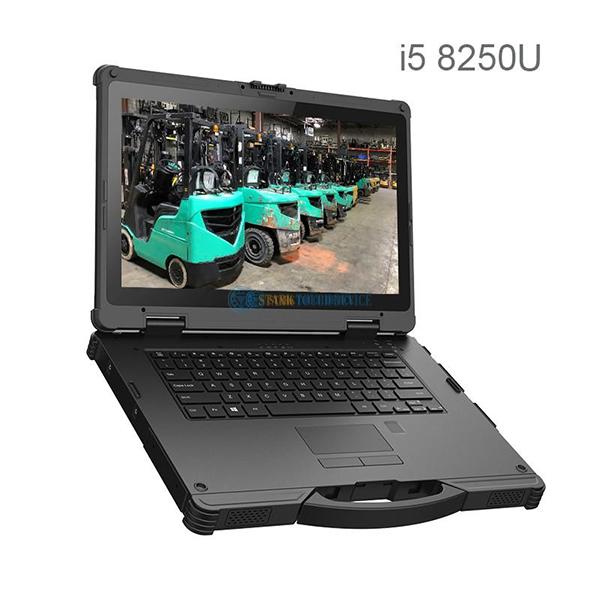
One of the key benefits of cloud integration is the ability to access industrial data from anywhere at any time. This remote accessibility is particularly valuable for multinational companies with production facilities spread across different geographical locations. Engineers and managers can monitor production processes, troubleshoot issues, and make adjustments without being physically present on - site, reducing downtime and improving overall productivity.
Key Considerations for Cloud Data Integration
Data Security and Compliance
When integrating industrial control computers with the cloud, data security is of param utmost importance. Industrial data often contains sensitive information about production processes, product designs, and customer orders. A breach of this data could lead to significant financial losses, legal liabilities, and damage to a company's reputation.
To ensure data security, encryption techniques should be employed both during data transmission and storage. Secure Socket Layer (SSL) or Transport Layer Security (TLS) protocols can be used to encrypt data as it travels between the industrial control computer and the cloud platform. Additionally, data stored in the cloud should be encrypted using strong encryption algorithms to prevent unauthorized access.
Compliance with industry - specific regulations is also crucial. Different industries, such as healthcare, automotive, and aerospace, have their own set of data protection and privacy regulations. For example, the General Data Protection Regulation (GDPR) in the European Union imposes strict requirements on the collection, storage, and processing of personal data. Industrial companies must ensure that their cloud integration solutions comply with all relevant regulations to avoid legal penalties.
Data Synchronization and Consistency
Maintaining data synchronization and consistency between the industrial control computer and the cloud is another critical challenge. Industrial control systems generate a large volume of data in real - time, and this data needs to be accurately and promptly reflected in the cloud database. Any delays or inconsistencies in data synchronization can lead to incorrect decision - making and operational inefficiencies.
To address this issue, real - time data synchronization mechanisms should be implemented. These mechanisms can use techniques such as event - driven architecture, where changes in the industrial control system trigger immediate updates to the cloud database. Additionally, data validation and verification processes should be in place to ensure that the data being synchronized is accurate and complete. For example, checksums can be used to verify the integrity of data during transmission, and data reconciliation processes can be run periodically to identify and resolve any discrepancies between the local and cloud - based data.
Implementation Approaches for Cloud Data Integration
API - Based Integration
Application Programming Interfaces (APIs) provide a flexible and scalable way to integrate industrial control computers with cloud platforms. APIs define a set of rules and protocols that allow different software applications to communicate with each other. By using APIs, industrial control computers can send data to the cloud and receive commands or feedback in a standardized manner.
For example, a RESTful API can be used to expose the data and functions of an industrial control computer to the cloud. The industrial control computer can act as a server, providing endpoints that the cloud application can call to retrieve data or send control commands. This approach allows for easy integration with a wide range of cloud - based services, such as data analytics platforms, machine learning models, and visualization tools.
API - based integration also offers the advantage of modularity. Different components of the industrial control system can have their own APIs, allowing for independent development and integration. This makes it easier to update or replace individual components without affecting the overall integration with the cloud.
Middleware Solutions
Middleware solutions act as an intermediary layer between the industrial control computer and the cloud platform, facilitating communication and data exchange. Middleware can handle tasks such as data transformation, protocol conversion, and message routing, simplifying the integration process.
For instance, a message - oriented middleware (MOM) can be used to decouple the industrial control computer from the cloud application. The industrial control computer can publish data to a message broker, and the cloud application can subscribe to the relevant topics to receive the data. This approach provides a high level of scalability and fault - tolerance, as the message broker can handle large volumes of data and ensure that messages are delivered even in the event of network failures.
Middleware solutions can also support multiple communication protocols, allowing industrial control computers using different protocols to communicate with the cloud platform. This is particularly useful in legacy industrial environments where a variety of communication standards are in use.
Application Scenarios of Cloud Data Integration
Predictive Maintenance
One of the most promising applications of cloud data integration in industrial control is predictive maintenance. By continuously collecting and analyzing data from industrial equipment, such as vibration sensors, temperature sensors, and pressure gauges, cloud - based predictive maintenance systems can detect early signs of equipment failure.
Machine learning algorithms can be applied to the historical and real - time data stored in the cloud to identify patterns and anomalies that indicate potential problems. For example, if the vibration levels of a motor start to deviate from the normal range, the system can generate an alert, allowing maintenance personnel to schedule repairs before the motor fails completely. This proactive approach to maintenance can significantly reduce downtime, extend equipment lifespan, and lower maintenance costs.
Supply Chain Optimization
Cloud data integration can also play a crucial role in optimizing the supply chain. By connecting industrial control computers with cloud - based supply chain management systems, companies can gain real - time visibility into inventory levels, production schedules, and logistics operations.
For example, data from industrial control computers can be used to update inventory levels in the cloud in real - time. This information can then be shared with suppliers, allowing them to adjust their production and delivery schedules accordingly. Additionally, by analyzing production data in the cloud, companies can identify bottlenecks in the production process and optimize production schedules to meet customer demand more efficiently. This level of supply chain visibility and optimization can lead to reduced inventory costs, improved delivery times, and increased customer satisfaction.