Welcome STARK TOUCH DEVICE!


Solutions
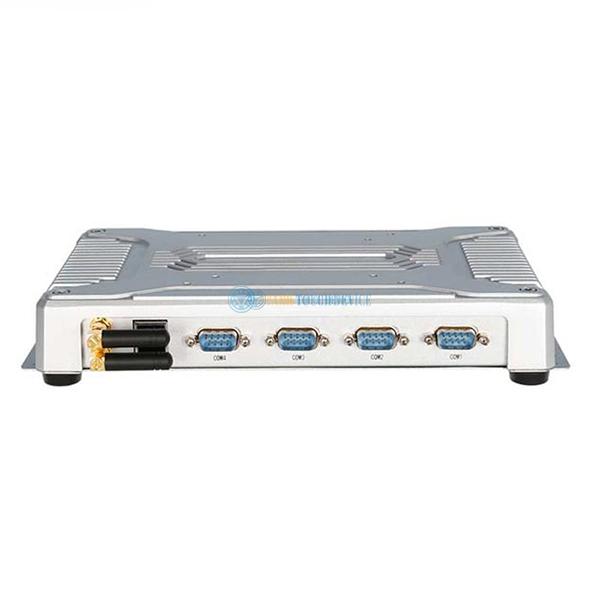
Integrated IO industrial control computer interface integration
Integrated I/O Industrial Control Computers: Streamlining Interface Management
Industrial control systems demand seamless connectivity between machines, sensors, and control units. Integrated I/O industrial control computers consolidate diverse communication interfaces into a single platform, eliminating the need for external adapters and reducing cable clutter. This integration enhances system reliability, simplifies maintenance, and accelerates deployment in automated environments.
Core Benefits of Integrated I/O Architectures
Reduced Latency and Improved Signal Integrity
Combining digital, analog, and communication interfaces onto a single motherboard minimizes signal propagation delays. Shortened trace lengths between components reduce electromagnetic interference (EMI), ensuring accurate data transmission even in high-noise environments. For example, a motion control system integrating encoder feedback and PWM outputs directly on the CPU board can achieve sub-millisecond response times, critical for precision machining applications.
Space Optimization and Scalability
Traditional setups often require multiple expansion cards to handle varied I/O types, consuming valuable rack space. Integrated solutions embed these functions into the chassis, freeing up slots for additional functionality like machine vision modules or wireless adapters. Some designs adopt modular architectures, allowing users to add specialized I/O banks as production demands evolve without overhauling the entire system.
Simplified Wiring and Diagnostics
Centralized I/O management reduces the number of physical connections, lowering the risk of loose cables or incorrect terminations. Built-in diagnostic LEDs and software tools provide real-time status monitoring for each channel, enabling technicians to pinpoint faults without tracing complex wiring diagrams. This streamlined troubleshooting cuts downtime by up to 40% compared to distributed I/O configurations.
Key Interface Types and Applications
Digital I/O for Discrete Control
Digital inputs handle binary signals from limit switches, push buttons, and proximity sensors, while digital outputs drive solenoids, relays, and LED indicators. Integrated systems often support high-density configurations, with 32 or more channels per module. This density benefits applications like packaging lines, where dozens of sensors monitor product positioning and quality at high speeds.
Analog I/O for Precision Monitoring
Analog inputs convert voltage or current signals from temperature sensors, pressure transducers, and flow meters into digital data for processing. Integrated solutions typically include 16-bit resolution ADCs, capturing subtle variations critical in chemical processing or HVAC control. Some designs incorporate signal conditioning circuits to protect against voltage spikes and stabilize readings from noisy sources.
Fieldbus and Industrial Ethernet Communication
Modern control computers integrate multiple communication protocols, such as PROFINET, EtherCAT, or Modbus TCP, enabling seamless integration with existing plant networks. Dual Ethernet ports support redundant networking, ensuring continuous data exchange even if one link fails. This capability is vital for distributed control systems spanning large facilities like automotive assembly plants or power generation stations.
Advanced Integration Techniques
Real-Time Synchronization Across Interfaces
High-speed applications like robotic arms require precise coordination between motor drives, sensor feedback, and safety systems. Integrated I/O computers use hardware-level synchronization mechanisms, such as IEEE 1588 Precision Time Protocol (PTP), to align data timestamps across multiple interfaces. This synchronization ensures sub-microsecond accuracy, preventing collisions or misalignments in multi-axis systems.
Edge Computing Capabilities
Embedding processing power near I/O points enables local data preprocessing, reducing latency and network bandwidth usage. For instance, a vibration analysis module integrated with analog inputs can detect machine faults in real time, triggering alerts before catastrophic failures occur. This edge intelligence is particularly valuable in remote locations like offshore oil platforms, where continuous connectivity may be unreliable.
Security-Enhanced Interface Design
Integrated I/O systems incorporate hardware-based security features to protect against cyber threats. Secure boot mechanisms verify firmware integrity during startup, while encrypted communication channels prevent unauthorized access to control data. Some designs include physical isolation between critical I/O channels and network interfaces, isolating safety-critical functions from potential cyberattacks.
Industry-Specific Implementation Examples
Automotive Manufacturing
Body-in-white welding lines rely on integrated I/O computers to coordinate hundreds of servo motors and sensors. The systems process encoder feedback to maintain precise welding gun positioning while monitoring pneumatic cylinder pressures to ensure consistent weld quality. Redundant Ethernet links connect to plant-wide MES systems, enabling real-time production tracking.
Pharmaceutical Production
Cleanroom environments demand sterile, reliable control of mixing vessels and filling machines. Integrated I/O computers with analog inputs track temperature and pH levels, adjusting chemical ratios dynamically. Digital outputs control valve actuators with millisecond precision, ensuring accurate dosing and minimizing product waste.
Water Treatment Facilities
SCADA systems managing pump stations and filtration units use integrated I/O to monitor flow rates, water levels, and chemical concentrations. Fieldbus interfaces connect to remote sensors, while analog outputs regulate valve positions to maintain optimal treatment parameters. Built-in redundancy ensures uninterrupted operation during equipment maintenance or power fluctuations.
By consolidating diverse I/O functions into a unified platform, industrial control computers achieve higher performance, reliability, and flexibility. This integration supports the evolving demands of Industry 4.0, where real-time data exchange and adaptive control are essential for optimizing production efficiency and product quality.