Welcome STARK TOUCH DEVICE!


Solutions
Embedded industrial control computer hardware architecture
Embedded Industrial Control Computer Hardware Architecture: Key Components and Modern Trends
Industrial automation relies on embedded control systems that integrate specialized hardware to manage machinery, process data, and ensure operational efficiency. These systems are designed to withstand harsh environments while delivering real-time performance, low power consumption, and robust security. Below is an in-depth exploration of their hardware architecture and evolving trends.
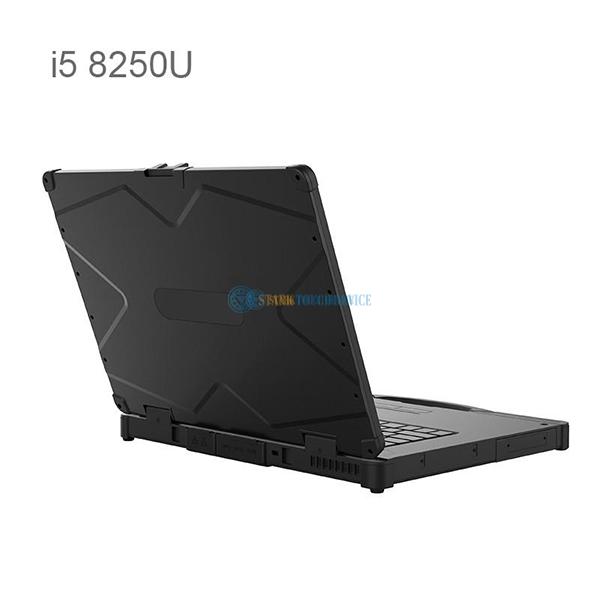
Core Hardware Components of Embedded Industrial Control Systems
Processing Units: Microcontrollers vs. Microprocessors
Embedded industrial controllers typically use microcontrollers (MCUs) or microprocessors (MPUs) as their computational core. MCUs integrate a CPU, memory, and I/O peripherals on a single chip, making them ideal for cost-sensitive applications like motor control or sensor interfacing. For example, MCUs with ARM Cortex-M cores are widely used in PLCs to handle discrete logic tasks.
MPUs, on the other hand, offer higher processing power and support complex operating systems like Linux or real-time OS (RTOS). They excel in applications requiring advanced analytics, such as predictive maintenance or machine vision. Modern MPUs often incorporate heterogeneous architectures, combining CPU cores with GPUs or AI accelerators to handle edge computing workloads.
Memory Hierarchy: Balancing Speed and Reliability
Embedded industrial systems employ a tiered memory structure to optimize performance. Volatile memory, such as SRAM or DRAM, provides fast access for runtime data, while non-volatile memory (e.g., Flash, EEPROM) stores firmware and configuration settings.
For high-reliability applications, systems may use redundant memory configurations or error-correcting code (ECC) DRAM to prevent data corruption. Additionally, some designs integrate wear-leveling algorithms in Flash memory to extend lifespan in write-intensive scenarios, such as logging sensor data over years.
I/O Interfaces: Connecting the Physical and Digital Worlds
Industrial controllers require diverse I/O options to interface with sensors, actuators, and networks. Common interfaces include:
Digital I/O: For binary signals like switch states or emergency stops.
Analog I/O: To process voltage or current signals from temperature sensors or pressure transducers.
Fieldbus Protocols: Such as PROFIBUS, Modbus, or CAN bus, enabling communication with legacy industrial equipment.
Ethernet and Industrial Ethernet: Supporting high-speed data exchange for SCADA systems or IIoT gateways.
Modern designs also incorporate wireless interfaces like Wi-Fi 6 or 5G to enable remote monitoring and cloud connectivity, reducing cabling costs in large facilities.
Evolving Trends Shaping Embedded Industrial Hardware
Edge Computing and Real-Time Decision-Making
The shift toward edge computing is redefining industrial control architectures. By processing data locally—close to sensors and actuators—systems reduce latency and bandwidth usage. For instance, edge nodes equipped with AI accelerators can analyze vibration patterns in real time to detect equipment failures before they occur, minimizing downtime.
This trend also drives the adoption of distributed control systems (DCS), where multiple embedded controllers collaborate to manage complex processes. Such architectures improve scalability and fault tolerance, as failures in one node don’t cripple the entire system.
Security-by-Design: Protecting Critical Infrastructure
As industrial networks become more connected, cybersecurity is no longer an afterthought. Modern embedded controllers integrate hardware-based security features, such as:
Secure Boot: Ensures only authenticated firmware runs on the device.
Trusted Platform Modules (TPMs): Store cryptographic keys and certificates for secure authentication.
Hardware-Accelerated Encryption: Offloads encryption/decryption tasks to dedicated modules, improving performance without compromising security.
Regulatory frameworks like IEC 62443 and ISO/SAE 21434 are pushing manufacturers to adopt these measures, making security a core requirement for industrial embedded systems.
Digital Twins and Model-Based Engineering
Digital twins—virtual replicas of physical systems—are transforming how industrial controllers are designed and maintained. By simulating machinery behavior in software, engineers can test control algorithms before deployment, reducing development time and risks.
For example, a digital twin of a manufacturing line can model how changes in production speed affect equipment stress, allowing controllers to optimize parameters dynamically. This approach also supports predictive maintenance, as the twin can forecast component failures by analyzing historical and real-time data.
Design Considerations for Industrial Embedded Systems
Ruggedization: Ensuring Reliability in Harsh Environments
Industrial controllers must operate in extreme temperatures, humidity, or vibration levels. Hardware designs often include:
Conformal Coating: Protects PCBs from moisture and dust.
Wide-Input Power Supplies: Accept unstable voltage ranges (e.g., 9–36V DC) common in industrial settings.
Solid-State Storage: Replaces hard drives with Flash memory to resist shocks and vibrations.
Power Efficiency: Extending Operational Lifespan
Many industrial devices run on batteries or energy-harvesting systems (e.g., solar panels). Low-power MCUs with sleep modes and optimized power management units (PMUs) are critical for such applications. For instance, a wireless sensor node might consume microamps in standby mode, waking only to transmit data periodically.
Scalability: Adapting to Evolving Needs
Industrial processes often change over time, requiring controllers to support additional sensors or communication protocols. Modular hardware designs—such as stackable I/O modules or FPGA-based reconfigurable logic—allow systems to evolve without full replacements.
Conclusion
Embedded industrial control computers are the backbone of modern automation, combining specialized hardware with intelligent software to drive efficiency and safety. As trends like edge computing, security-by-design, and digital twins gain traction, these systems are becoming more adaptive, resilient, and capable of handling the complexities of Industry 4.0. By focusing on core components, emerging trends, and critical design considerations, manufacturers can build embedded solutions that meet the demands of tomorrow’s industrial landscape.