Welcome STARK TOUCH DEVICE!


Solutions
Interlocking control of industrial control computer equipment
Industrial Control Computer Equipment Synergistic Control: Enabling Seamless Automation Integration
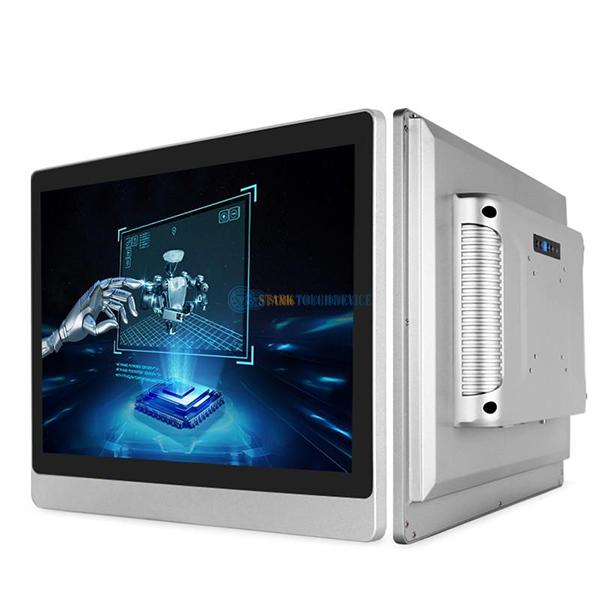
The ability to coordinate multiple industrial devices through a centralized control system is transforming manufacturing operations, enabling real-time synchronization, adaptive process optimization, and enhanced operational safety. Industrial control computers (ICCs) serve as the backbone of these synergistic control architectures, bridging diverse equipment types through standardized communication protocols and intelligent decision-making algorithms.
Core Principles of Equipment Synergistic Control
Unified Communication Framework
Effective device coordination requires a common language across heterogeneous systems. Modern ICCs implement multi-protocol support to interface with PLCs, sensors, actuators, and robotic systems using standards like OPC UA, Modbus TCP, and EtherCAT. A automotive assembly line, for instance, might use OPC UA to synchronize welding robots, conveyor systems, and quality inspection cameras, ensuring precise timing between operations.
Time-sensitive networking (TSN) technologies further enhance coordination by providing deterministic latency guarantees. In a semiconductor fabrication plant, TSN-enabled ICCs synchronize photolithography machines, chemical dispensers, and wafer handling robots with microsecond-level precision, reducing alignment errors by 80% compared to traditional Ethernet-based solutions.
Real-Time Data Fusion and Contextualization
Synergistic control relies on combining data from multiple sources to create actionable insights. ICCs aggregate operational parameters (temperature, pressure, vibration) with production metrics (cycle time, defect rates) and environmental factors (ambient humidity, power consumption) to form comprehensive situational awareness. A food processing facility, for example, might correlate conveyor speed data with product weight measurements to dynamically adjust packaging line parameters, maintaining consistent fill levels across shifts.
Contextual filtering ensures only relevant data triggers control actions. An energy management system in a steel mill could ignore transient voltage fluctuations while responding to sustained deviations that indicate equipment malfunction. This selective processing reduces unnecessary control interventions, extending equipment lifespan by minimizing wear from frequent adjustments.
Implementation Strategies for Complex Systems
Hierarchical Control Architecture
Distributed control architectures divide responsibilities across multiple ICC layers to balance computational load and improve fault tolerance. A petrochemical refinery might employ field-level controllers for individual process units (distillation columns, reactors), with plant-level ICCs coordinating raw material feed rates and product blending operations. This hierarchy ensures local decisions can be made quickly (e.g., emergency shutdowns), while global optimizations consider cross-unit dependencies.
Middleware platforms facilitate communication between control layers. These software frameworks translate between proprietary protocols and standard interfaces, enabling seamless integration of legacy equipment with new IoT-enabled devices. A paper mill upgrading its control system could use middleware to connect 30-year-old pulp presses with modern quality sensors without replacing entire control infrastructures.
Adaptive Control Algorithms
Machine learning-driven control algorithms enable systems to optimize operations based on historical patterns and real-time feedback. Reinforcement learning models in a packaging plant might adjust robotic gripping force based on product fragility scores derived from past breakage incidents, reducing damage rates by 45% over manual tuning methods.
Predictive control techniques anticipate future states to prevent issues before they occur. An HVAC system in a large commercial building could use weather forecasts and occupancy patterns to pre-cool spaces before peak demand periods, cutting energy consumption by 30% while maintaining comfort levels. These algorithms require ICCs with sufficient computational power to process complex models without introducing unacceptable latency.
Critical Success Factors for Synergistic Deployments
Robust Cybersecurity Measures
Interconnected control systems create expanded attack surfaces that demand comprehensive security strategies. ICCs must implement defense-in-depth protections including network segmentation, role-based access control, and encrypted communication channels. A water treatment facility might isolate SCADA networks from corporate IT systems using firewalls with strict port filtering, while requiring multi-factor authentication for remote maintenance access.
Anomaly detection systems monitor control traffic for suspicious patterns, such as unauthorized command sequences or data exfiltration attempts. An electricity grid operator could deploy AI-powered intrusion detection systems to identify and block cyberattacks targeting substation control devices, preventing widespread outages. Regular security audits and firmware updates ensure protection against emerging threats.
Scalability and Future-Proofing
Control architectures must accommodate evolving production requirements without requiring complete system overhauls. Modular ICC designs with expandable I/O capabilities allow factories to add new equipment types or increase sensor density as needs change. A pharmaceutical manufacturer might start with 200 control points for tablet pressing operations, later expanding to 1,000 points when adding coating and packaging lines by simply adding I/O modules to existing ICCs.
Standardized interfaces and open architectures promote interoperability with future technologies. Implementing IoT-ready communication protocols like MQTT ensures compatibility with emerging edge computing devices and cloud analytics platforms. A textile mill adopting Industry 4.0 initiatives could gradually integrate AI-powered quality inspection cameras without replacing its existing ICC infrastructure, leveraging MQTT bridges to connect new sensors to legacy control systems.
Industry-Specific Applications Driving Adoption
Continuous Process Industries
In chemical manufacturing, precise coordination between reactors, separators, and storage tanks is essential for product quality and safety. ICCs monitor thousands of process variables in real-time, adjusting feed rates, temperature setpoints, and pressure relief valves to maintain optimal operating conditions. A polymer production plant might use model predictive control (MPC) algorithms to balance raw material inputs with catalyst activity levels, achieving 99.98% product consistency while reducing feedstock waste by 12%.
Discrete Manufacturing Automation
Automotive and electronics assembly lines rely on synchronized motion control to maintain production throughput. ICCs coordinate robotic arms, conveyor systems, and testing equipment with millisecond-level precision, ensuring components arrive at workstations exactly when needed. A smartphone manufacturer could use time-stamped position data from conveyor encoders to trigger camera inspections as devices pass specific points, reducing inspection cycle times from 8 seconds to 2.5 seconds per unit.
PREVIOUS:Alarm linkage mechanism for industrial control computers
NEXT:工业控制计算机AI算法部署能力