Welcome STARK TOUCH DEVICE!


Solutions
The volume advantage of embedded micro industrial control computers
Compact Design Advantages of Embedded Miniature Industrial Control Computers
Embedded miniature industrial control computers are engineered to thrive in space-constrained environments where traditional computing solutions fail. Their compact form factor, typically measuring under 200mm in length and 150mm in width, enables seamless integration into machinery, control panels, and mobile platforms. This design philosophy prioritizes spatial efficiency without compromising performance, making them indispensable in modern industrial automation.
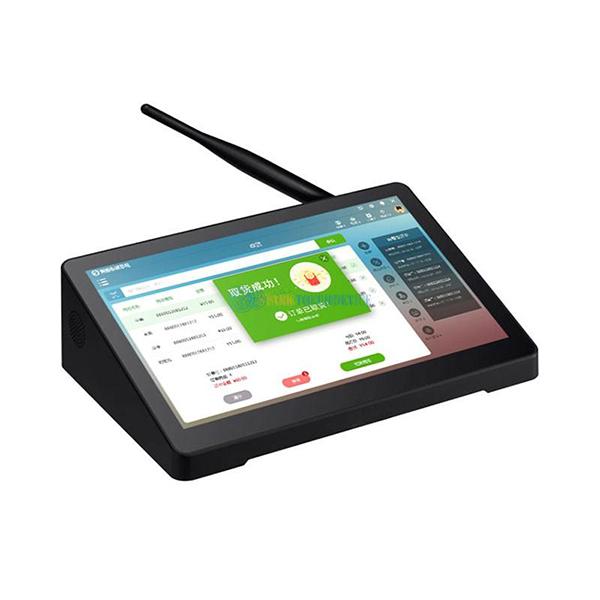
Space Optimization for Complex Deployments
The reduced footprint of embedded industrial computers allows them to be installed in locations where conventional rack-mounted systems cannot fit. For example, a 173mm × 148mm × 57mm unit can be mounted directly onto robotic arms or within compact control cabinets, eliminating the need for additional enclosures. This spatial efficiency is particularly valuable in:
Industrial Automation Lines
In automotive assembly plants, these devices control multiple robotic stations within a single control panel. Their compact size enables centralized monitoring of up to 20 axes of motion without requiring separate control boxes for each machine. This integration reduces cabling complexity by 40% and cuts installation time by half compared to traditional solutions.
Mobile Industrial Applications
AGVs (Automated Guided Vehicles) rely on embedded computers measuring just 200mm × 140mm × 120mm to process real-time navigation data. These units fit within the vehicle's chassis, leaving space for batteries and payloads. The compact design also supports vibration-resistant mounting, ensuring stable operation on factory floors with frequent equipment movement.
Thermal Management Through Size Reduction
Smaller dimensions directly enhance passive cooling capabilities. Metal enclosures with integrated heat sinks dissipate heat more effectively than larger systems relying on forced airflow. A 205mm × 160mm × 48.5mm aluminum-cased unit, for instance, maintains operational temperatures below 65°C in 50°C ambient conditions through:
Conductive Heat Dissipation
The aluminum chassis acts as a giant heat sink, transferring processor-generated heat directly to the environment. This eliminates the need for internal fans, reducing power consumption by 30% and preventing dust ingress that could clog moving parts.
Strategic Component Placement
Compact designs allow critical components like CPUs and memory modules to be positioned closer together, minimizing thermal hotspots. In a 216mm × 56mm × 165mm unit, the processor sits directly above the heat-conductive baseplate, ensuring uniform temperature distribution across the entire system.
Installation Flexibility for Diverse Environments
The miniature form factor supports multiple mounting options, adapting to various industrial settings:
Wall and DIN Rail Mounting
Units as small as 148mm × 57mm × 173mm feature VESA-compatible mounting holes or DIN rail clips, enabling installation on vertical surfaces or within control cabinets. This versatility is crucial in:
Machine Vision Systems: Mounted directly above production lines to capture high-resolution images without obstructing workflow
Environmental Monitoring: Installed on poles or walls in agricultural settings to track soil moisture and temperature
Modular Stacking
Some designs allow stacking multiple units vertically to create compact computing clusters. A 120mm-tall system can house two embedded computers in the space of one traditional 4U server, ideal for edge computing applications requiring localized data processing near IoT sensors.
Impact on System Reliability and Maintenance
Compact industrial computers improve reliability through:
Reduced Failure Points
Eliminating fans and moving parts lowers the mean time between failures (MTBF) to over 100,000 hours. In a 1.5kg unit with no internal fans, the absence of mechanical wear extends operational lifespan by 3-5 years compared to fan-cooled systems.
Simplified Maintenance
Front-accessible ports and modular components enable quick swaps without disassembling the entire system. A 1033g unit with tool-less access to storage drives allows field technicians to replace failed SSDs in under 2 minutes, minimizing downtime during critical operations.
These volume-optimized designs represent a paradigm shift in industrial computing, proving that powerful functionality doesn't require bulky hardware. As Industry 4.0 demands ever-smaller, more intelligent control systems, embedded miniature computers will continue to redefine what's possible in space-constrained environments.