Welcome STARK TOUCH DEVICE!


Solutions
The analog quantity acquisition range of industrial control computers
Comprehensive Overview of Analog Signal Acquisition Ranges in Industrial Control Computers
Industrial control computers (ICCs) play a pivotal role in modern automation systems by converting continuous physical signals into digital data for processing and control. The analog signal acquisition range of these systems directly impacts their applicability across diverse industrial scenarios, from precision manufacturing to environmental monitoring. This article explores the core parameters, environmental adaptability, and advanced functionalities that define the analog acquisition capabilities of ICCs.
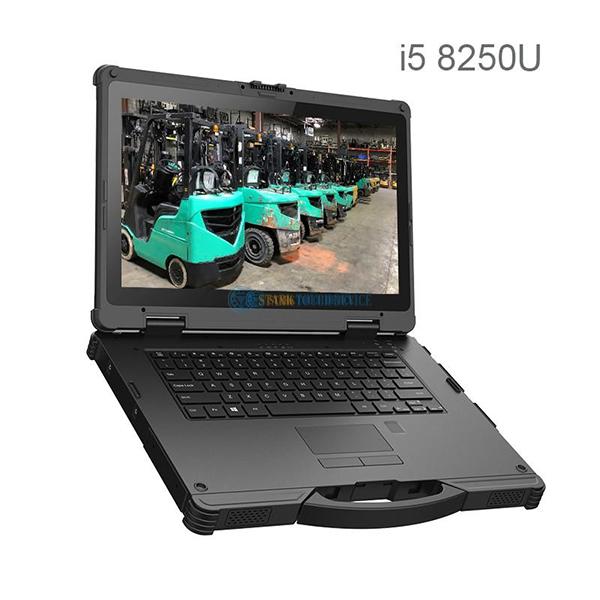
Core Signal Types and Acquisition Parameters
Temperature Acquisition Range
Temperature sensors integrated with ICCs typically support ranges spanning -40°C to 85°C for industrial-grade modules, with some specialized solutions extending to -50°C to 125°C for extreme environments. In agricultural automation, for example, greenhouse monitoring systems require sensors capable of capturing soil temperatures as low as -10°C during winter and air temperatures exceeding 50°C in tropical regions. The resolution of these acquisitions often reaches 0.1°C through 16-bit ADCs (Analog-to-Digital Converters), enabling precise climate control for crop cultivation.
Pressure and Flow Acquisition Capabilities
Pressure transducers in hydraulic systems and flow meters in chemical processing plants demand high-precision acquisition ranges. Standard industrial modules handle 0–10V or 4–20mA signals corresponding to pressure ranges from vacuum levels (-1 bar) to 600 bar for hydraulic applications. Flow measurement systems frequently utilize differential pressure principles, with ICCs acquiring signals proportional to flow rates ranging from 0.1 L/min to 10,000 m³/h, depending on pipeline diameters and fluid viscosities. The sampling rates for these parameters typically range from 10 SPS (Samples Per Second) to 1 kHz, balancing real-time responsiveness with data processing efficiency.
Electrical Signal Acquisition Spectrum
Voltage and current monitoring in power distribution systems represent another critical application area. ICCs acquire AC voltage signals from 10V to 1000V RMS and DC current signals from 4mA to 20mA (standard industrial loops) or 0–50mA for high-current applications. Some advanced modules support harmonic analysis by sampling electrical signals at rates exceeding 10 kHz, enabling detection of power quality issues such as voltage sags, swells, and harmonic distortions. The input impedance of these acquisition channels often exceeds 1 MΩ to minimize circuit loading effects.
Environmental Adaptability and Reliability Engineering
Temperature Compensation Mechanisms
To maintain accuracy across fluctuating ambient conditions, ICCs employ temperature compensation algorithms that adjust sensor readings based on real-time environmental data. For instance, a thermistor-based temperature sensor with a nominal accuracy of ±0.5°C at 25°C might exhibit ±2°C error at -20°C without compensation. By integrating temperature coefficients into the ADC conversion process, modern ICCs reduce this error margin to ±0.2°C across their entire operating range. This capability is particularly vital in outdoor applications like solar power plant monitoring, where panel temperatures can vary by 50°C between dawn and peak sunlight hours.
Electromagnetic Interference (EMI) Shielding
Industrial environments subject ICCs to electromagnetic noise from motors, welders, and high-voltage power lines. To mitigate this, acquisition modules incorporate multi-layer shielding designs:
Conductive Enclosures: Aluminum or steel housings with conductive gaskets block low-frequency interference.
Filter Circuits: LC filters on analog inputs suppress high-frequency noise above 1 MHz.
Optical Isolation: RS485 communication interfaces use optocouplers to prevent ground loop currents, with isolation ratings exceeding 2 kVrms.
These measures enable ICCs to comply with international EMI standards such as IEC 61000-4-6 (conducted immunity) and IEC 61000-4-3 (radiated immunity), ensuring stable operation in environments with electromagnetic noise levels up to 10 V/m.
Vibration and Shock Resistance
For mobile applications like mining equipment monitoring or vehicle-mounted control systems, ICCs must withstand vibrations up to 5 Grms (root mean square acceleration) and shocks exceeding 50g. This is achieved through:
Rigid Mounting Brackets: Dampening vibrations transmitted from equipment frames.
Conformal Coating: Protecting PCB components from moisture and dust ingress.
Solid-State Storage: Replacing mechanical hard drives with flash memory to prevent data corruption due to shocks.
Such designs allow ICCs to maintain signal integrity even in applications like offshore drilling platforms, where vibration frequencies can reach 100 Hz.
Advanced Functionalities for Industrial 4.0 Integration
Edge Computing Capabilities
Modern ICCs integrate microprocessors capable of local data preprocessing, reducing cloud dependency and network latency. For example, a vibration analysis module might: