Welcome STARK TOUCH DEVICE!


Solutions
Storage configuration for data-intensive industrial control computers
Storage Configuration for Data - Intensive Industrial Control Computers
Understanding the Storage Needs of Data - Intensive Industrial Control Computers
Data - intensive industrial control computers are at the core of modern industrial automation systems. They are responsible for collecting, processing, and storing vast amounts of data in real - time. This data can range from sensor readings in a manufacturing plant to video feeds from surveillance cameras in a smart factory. The storage requirements of these computers are unique and demanding.
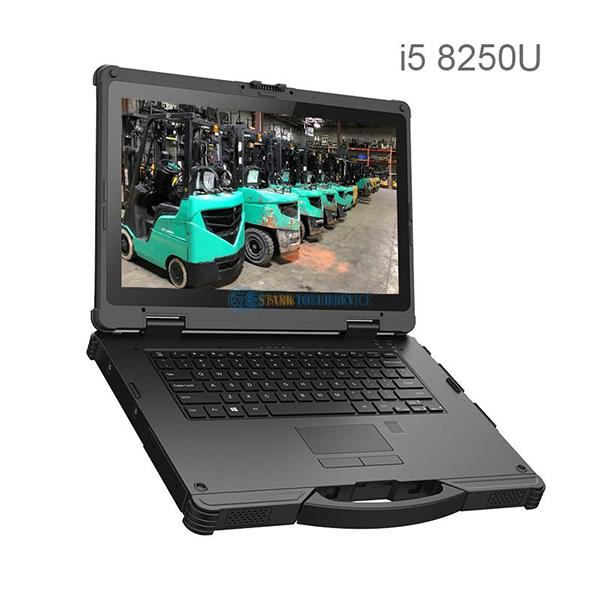
In a manufacturing environment, for example, hundreds or even thousands of sensors may be continuously generating data. This data needs to be stored for analysis to optimize production processes, predict equipment failures, and ensure quality control. The storage system must be able to handle high - volume data writes without significant latency. Additionally, the data often needs to be retained for long periods for regulatory compliance and historical analysis.
Real - Time Data Processing and Storage
Real - time data processing is a critical aspect of data - intensive industrial control computers. The storage system must be capable of quickly writing and retrieving data to support real - time decision - making. For instance, in a robotic assembly line, the control computer needs to receive sensor data about the position and orientation of parts in real - time and make immediate adjustments. If the storage system has high latency, it can lead to delays in the control loop, affecting the efficiency and accuracy of the assembly process.
Long - Term Data Retention
Long - term data retention is also essential. Historical data can be used to identify trends, patterns, and anomalies over time. This information can help in predicting equipment failures before they occur, reducing downtime and maintenance costs. For example, by analyzing the vibration data of a machine over several months, it may be possible to detect early signs of wear and tear and schedule maintenance proactively. The storage system must be reliable and have a long lifespan to ensure that the data is accessible for extended periods.
Choosing the Right Storage Type for Data - Intensive Applications
There are several storage types available for data - intensive industrial control computers, each with its own advantages and disadvantages.
Solid - State Drives (SSDs) for High - Speed Performance
SSDs are a popular choice for data - intensive applications due to their high - speed performance. They use flash memory to store data, which allows for much faster read and write speeds compared to traditional hard disk drives (HDDs). In a data - intensive industrial control computer, SSDs can significantly reduce the latency in data access, enabling real - time processing. For example, in a high - frequency trading system in a financial industrial setting, SSDs can ensure that trade orders are processed and executed quickly, giving a competitive edge.
SSDs also have no moving parts, making them more resistant to vibration and shock. This is important in industrial environments where the control computer may be subject to physical disturbances. However, SSDs are generally more expensive per unit of storage capacity compared to HDDs, and their write endurance may be a concern in applications with extremely high - volume write operations.
Hard Disk Drives (HDDs) for Large - Capacity Storage
HDDs offer a cost - effective solution for large - capacity storage needs. They can store significantly more data than SSDs at a lower cost per gigabyte. In data - intensive industrial control computers that need to store large amounts of historical data, such as video surveillance footage in a security - sensitive industrial facility, HDDs can be a good choice.
HDDs have moving parts, including spinning disks and read - write heads, which make them more vulnerable to vibration and shock. However, modern HDDs are designed with some level of shock resistance, and in environments with relatively low levels of physical disturbance, they can provide reliable long - term storage. One drawback of HDDs is their slower read and write speeds compared to SSDs, which can be a limitation in real - time data processing applications.
Hybrid Storage Solutions for Optimal Performance and Capacity
Hybrid storage solutions combine the advantages of SSDs and HDDs. They typically use an SSD as a cache layer and an HDD for long - term storage. The SSD cache stores frequently accessed data, allowing for fast read and write operations, while the HDD provides large - capacity storage for less frequently accessed data.
In a data - intensive industrial control computer, a hybrid storage solution can offer a good balance between performance and cost. For example, in a data analytics application where a large dataset is stored on the HDD, but frequently used subsets of the data are cached on the SSD for faster processing, the overall system performance can be improved. This approach can be particularly useful in industrial environments where both real - time processing and long - term data retention are required.
Ensuring Data Integrity and Reliability in Storage Systems
Data integrity and reliability are of utmost importance in data - intensive industrial control computers. Any data loss or corruption can have serious consequences, such as production downtime, safety hazards, or regulatory non - compliance.
Redundancy and Fault Tolerance
Implementing redundancy in the storage system is a key strategy for ensuring data reliability. This can be achieved through techniques such as redundant array of independent disks (RAID). RAID configurations can provide protection against data loss in case of a single disk failure. For example, RAID 1 mirrors data across two disks, so if one disk fails, the data is still available on the other disk. RAID 5 and RAID 6 offer more advanced levels of redundancy by distributing parity information across multiple disks, allowing for recovery from multiple disk failures.
In addition to disk - level redundancy, it is also important to have backup systems in place. Regular backups of the data stored on the industrial control computer can be made to an external storage device or a remote server. This ensures that in case of a major system failure or disaster, the data can be restored from the backup.
Error Detection and Correction Mechanisms
Error detection and correction mechanisms are essential for maintaining data integrity. These mechanisms can detect errors that occur during data storage or transmission and correct them to prevent data corruption. For example, cyclic redundancy check (CRC) is a common error - detection technique used in storage systems. It generates a checksum for a block of data, and when the data is read back, the checksum is recalculated. If the two checksums do not match, an error has occurred.
More advanced error - correction codes, such as Reed - Solomon codes, can not only detect errors but also correct them. These codes are used in storage systems to recover data from damaged sectors on a disk or corrupted data during transmission. By implementing these error - detection and correction mechanisms, the storage system can ensure that the data stored in the data - intensive industrial control computer remains accurate and reliable.