Welcome STARK TOUCH DEVICE!


Solutions
Temperature adaptation of industrial control computers under wide temperature operating conditions
Temperature Adaptation of Industrial Control Computers in Wide - Temperature Operating Conditions
Understanding Wide - Temperature Operating Conditions
Wide - temperature operating conditions refer to environments where the temperature varies significantly beyond the normal room - temperature range. These environments can be extremely cold, such as in polar research stations or outdoor installations in cold regions, where temperatures can drop well below - 20°C. On the other hand, they can also be extremely hot, like in foundries or near industrial furnaces, where temperatures can soar above 60°C.
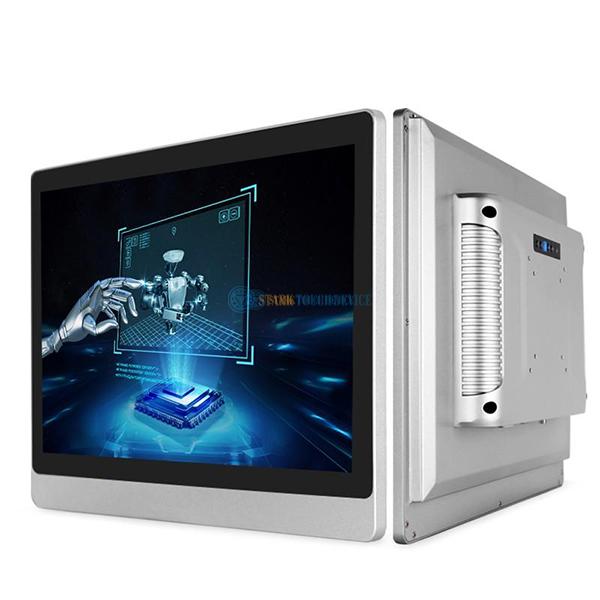
In cold environments, the low temperatures can cause several issues for industrial control computers. The lubricants in mechanical components may thicken, leading to increased friction and potential component failure. Electronic components may also experience reduced conductivity, affecting the overall performance of the computer. In hot environments, the high temperatures can cause components to overheat, leading to thermal stress, reduced lifespan, and even permanent damage. The thermal expansion of materials can also cause physical stress on the computer's structure, potentially leading to cracks or misalignments.
Impact on Component Performance
The performance of different components in an industrial control computer is affected differently by wide - temperature variations. The central processing unit (CPU) is highly sensitive to temperature. In cold conditions, the CPU may have difficulty starting up or may operate at a lower clock speed to prevent damage. In hot conditions, the CPU can overheat, triggering thermal throttling, which reduces its performance to prevent overheating. Memory modules, such as random - access memory (RAM), can also be affected. Cold temperatures can cause data retention issues, while high temperatures can lead to data corruption.
Storage devices, whether solid - state drives (SSDs) or hard disk drives (HDDs), are also vulnerable. Cold temperatures can make the moving parts in HDDs sluggish, and high temperatures can reduce the lifespan of both SSDs and HDDs. The power supply unit (PSU) is another critical component. In cold environments, the PSU may have difficulty providing stable power output, and in hot environments, it can overheat, leading to power fluctuations or complete failure.
Temperature Management Strategies for Industrial Control Computers
To ensure the reliable operation of industrial control computers in wide - temperature conditions, effective temperature management strategies are essential.
Active Cooling Systems
In hot environments, active cooling systems are crucial. These can include fans, heat sinks, and liquid cooling solutions. Fans are the most common active cooling method. They work by blowing air over the components to dissipate heat. Heat sinks are metal structures with fins that increase the surface area for heat dissipation. They are often used in combination with fans to enhance cooling efficiency. Liquid cooling systems use a liquid coolant to absorb heat from the components and transfer it to a radiator, where it is dissipated into the air. Liquid cooling is more efficient than air cooling and is often used in high - performance industrial control computers operating in extremely hot conditions.
Passive Cooling Techniques
In some cases, passive cooling techniques can be sufficient, especially in moderately hot or cold environments. Passive cooling relies on the natural conduction and convection of heat. For example, using materials with high thermal conductivity, such as copper or aluminum, for the computer's chassis can help dissipate heat more effectively. Designing the computer with proper ventilation slots can also enhance natural air circulation, facilitating heat dissipation. In cold environments, passive heating can be achieved by using materials that generate heat through electrical resistance or by enclosing the computer in an insulated enclosure to retain the heat generated by the components.
Temperature Sensors and Control Systems
Temperature sensors are an integral part of temperature management in industrial control computers. These sensors can monitor the temperature of critical components in real - time. Based on the temperature readings, a control system can adjust the operation of cooling or heating elements. For example, if the temperature of the CPU exceeds a certain threshold, the control system can increase the speed of the cooling fan or activate a liquid cooling pump. In cold environments, the control system can turn on heating elements when the temperature drops below a set point. This intelligent temperature control ensures that the industrial control computer operates within a safe and optimal temperature range.
Component Selection for Wide - Temperature Adaptation
Selecting the right components is a key step in ensuring that an industrial control computer can adapt to wide - temperature conditions.
Wide - Temperature - Rated Components
When choosing components for an industrial control computer, it is important to select those that are specifically rated for wide - temperature operation. Many component manufacturers offer products that can operate in temperature ranges from - 40°C to 85°C or even wider. These components are designed with materials and manufacturing processes that can withstand extreme temperatures without significant performance degradation. For example, wide - temperature - rated capacitors and resistors are less likely to fail in cold or hot conditions compared to standard components.
Solid - State Components for Vibration and Temperature Resistance
In environments with high levels of vibration, such as in mobile industrial equipment or outdoor installations, solid - state components are preferred. Solid - state drives (SSDs) have no moving parts, making them more resistant to vibration and shock compared to hard disk drives (HDDs). They also tend to perform better in wide - temperature conditions as they are less affected by temperature - induced changes in mechanical properties. Additionally, solid - state relays and other solid - state control devices can offer more reliable operation in extreme temperatures compared to their electromechanical counterparts.
High - Quality Connectors and Cables
Connectors and cables are often overlooked but are crucial for the reliable operation of an industrial control computer in wide - temperature conditions. High - quality connectors with proper insulation and sealing can prevent moisture ingress and ensure stable electrical connections even in cold or hot and humid environments. Cables with temperature - resistant insulation materials can withstand temperature variations without becoming brittle or losing their insulating properties. This helps to maintain the integrity of the electrical signals and prevent short - circuits or other electrical failures.