Welcome STARK TOUCH DEVICE!


Solutions
Operating temperature range of industrial control computers
Understanding the Operating Temperature Range of Industrial Control Computers
Industrial control computers are designed to function reliably in demanding environments where commercial-grade devices would fail. One of the most critical specifications for these systems is their operating temperature range, which determines their suitability for various industrial applications.
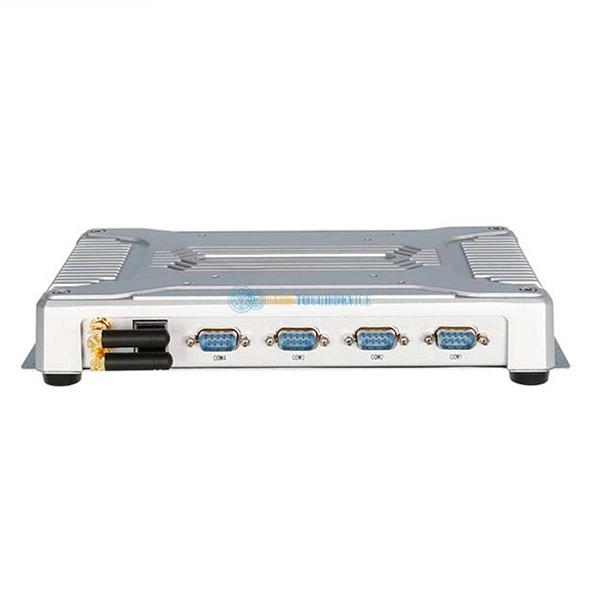
Temperature Range Classifications
Standard Industrial Grade
Most industrial control computers fall into the standard industrial temperature category, typically supporting operation between -20°C to 70°C. This range accommodates common factory environments where temperature fluctuations occur due to machinery operation, seasonal changes, or ventilation systems. Systems in this category often feature reinforced chassis and optimized thermal management to maintain stability across this spectrum.
Extended Industrial Grade
For applications in extreme conditions, extended industrial-grade computers offer broader temperature tolerance, usually spanning -40°C to 85°C. These devices incorporate specialized components such as industrial-grade capacitors, wide-temperature solid-state drives, and passive cooling solutions. The extended range makes them suitable for outdoor installations, unheated warehouses, or facilities near heat sources like furnaces or boilers.
Specialized Environmental Adaptations
Certain industrial scenarios demand even more extreme temperature capabilities. Computers designed for Arctic installations or desert operations may support -50°C to 100°C ranges through advanced engineering. These systems often feature:
Thermally conductive enclosures
Active cooling/heating systems
Component-level temperature compensation
Redundant thermal protection mechanisms
Factors Influencing Temperature Tolerance
Component Selection
The choice of microprocessors, memory modules, and storage devices significantly impacts thermal performance. Industrial-grade components undergo rigorous testing to ensure functionality across specified temperature ranges. For example, certain microcontrollers maintain data integrity at -40°C while others may fail below 0°C.
Thermal Design Considerations
Effective heat dissipation requires careful system architecture:
Heat sinks with optimized fin geometries
Thermal interface materials with high conductivity
Strategically placed ventilation openings
Dust-resistant filters for harsh environments
Conformal coating for circuit boards to prevent condensation damage
Environmental Monitoring Systems
Advanced industrial computers incorporate temperature sensors that:
Continuously monitor critical component temperatures
Trigger fan speed adjustments based on thermal load
Initiate safe shutdown procedures if thresholds are exceeded
Provide diagnostic data for preventive maintenance
Application-Specific Temperature Requirements
Manufacturing Automation
In automotive assembly plants, control computers must operate reliably despite:
Heat from welding equipment
Cooling effects of air conditioning systems
Temperature variations between production zones
These systems typically require -10°C to 60°C capability with rapid thermal transition tolerance.
Energy Sector Applications
Power generation facilities present unique challenges:
Nuclear plants require radiation-hardened components with extended temperature ranges
Solar farms need devices that function in both extreme heat and cold
Wind turbines demand computers resistant to rapid temperature cycling
Transportation Systems
Railway control computers must withstand:
Temperature extremes in unheated stations
Solar loading on outdoor equipment
- online service
- Whatsapp:+86-13480646839
- stark.sales@starktouchdevice.com
WeChat