Welcome STARK TOUCH DEVICE!


Solutions
Industrial control computer edge computing module expansion
Expanding Edge Computing Modules for Industrial Control Computers
In the rapidly evolving landscape of industrial automation, the integration of edge computing modules into industrial control computers has emerged as a game - changer. Edge computing brings computational power closer to the data source, enabling real - time processing, reducing latency, and enhancing overall system efficiency. This article explores the various aspects of expanding edge computing modules for industrial control computers, including the need for expansion, selection criteria, integration challenges, and potential applications.
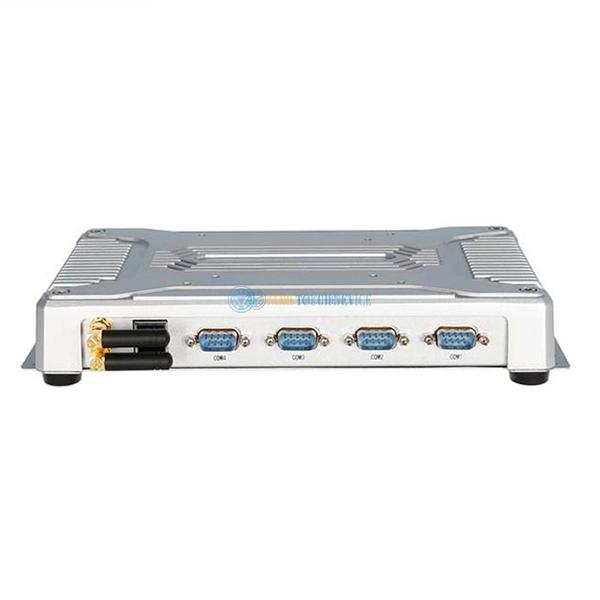
The Imperative for Edge Computing Module Expansion
Handling Increasing Data Volumes
Industrial processes are generating an ever - growing amount of data from a multitude of sensors, actuators, and other connected devices. Traditional industrial control computer architectures often struggle to process this massive influx of data in real - time. By expanding edge computing modules, industrial control computers can offload some of the data processing tasks from the central server or cloud, allowing for faster analysis and decision - making at the edge.
For example, in a large - scale manufacturing plant with hundreds of sensors monitoring temperature, pressure, and vibration, the raw data generated per second can be in the gigabytes. Edge computing modules can process this data locally, filtering out irrelevant information and only sending the critical data to the central system for further analysis and long - term storage.
Enabling Real - Time Decision Making
In many industrial applications, real - time decision - making is crucial for maintaining process stability, ensuring product quality, and preventing equipment failures. Edge computing modules can analyze sensor data in real - time and trigger immediate actions without the need to send the data to a remote server for processing.
Consider a robotic assembly line where sensors detect the position and orientation of components in real - time. An edge computing module can quickly analyze this data and adjust the robot's movements on the fly to ensure accurate assembly. This real - time response is not possible if the data has to be sent to a central server for processing, as the latency introduced by the network communication can lead to errors or delays in the assembly process.
Selecting the Right Edge Computing Modules for Expansion
Performance Requirements
When choosing edge computing modules for expansion, one of the key considerations is the performance requirements of the industrial application. The module should have sufficient processing power, memory, and storage capacity to handle the expected data volume and processing tasks.
For applications that involve complex algorithms, such as machine learning or computer vision, the edge computing module should be equipped with high - performance processors, such as multi - core CPUs or GPUs. Additionally, the module should have enough memory to store the necessary data and intermediate results during processing, and sufficient storage capacity to log data for troubleshooting and analysis.
Connectivity Options
Another important factor is the connectivity options of the edge computing module. It should support a wide range of communication protocols to enable seamless integration with existing industrial control systems, sensors, and other devices.
Common connectivity options include Ethernet, Wi - Fi, Bluetooth, and industrial protocols such as Modbus, Profibus, and CAN. The module should also have the ability to connect to cloud - based services for remote monitoring and management, if required. Having multiple connectivity options provides flexibility in designing the industrial network and allows for easy integration with different types of devices.
Integration Challenges and Solutions
Hardware Compatibility
One of the main challenges in expanding edge computing modules is ensuring hardware compatibility with the existing industrial control computer. The module should have the appropriate physical interface, such as PCIe, USB, or M.2, to connect to the control computer. It should also be compatible with the power supply and cooling requirements of the system.
To overcome this challenge, it is essential to carefully review the technical specifications of both the edge computing module and the industrial control computer before making a purchase. If compatibility issues are identified, solutions such as using adapters or modifying the system architecture may be required.
Software Integration
Software integration is another critical aspect of expanding edge computing modules. The module should be able to run the necessary software applications, such as operating systems, middleware, and application - specific software, without conflicts with the existing software on the industrial control computer.
This may involve configuring the software environment on the edge computing module, setting up communication channels between the module and the control computer, and ensuring data synchronization between different software components. Developers may need to write custom software or use existing software development kits (SDKs) provided by the module manufacturer to achieve seamless software integration.
Potential Applications of Expanded Edge Computing Modules
Predictive Maintenance
Expanded edge computing modules can play a crucial role in predictive maintenance applications. By analyzing sensor data from industrial equipment in real - time, the modules can detect early signs of equipment failure, such as abnormal vibrations, temperature fluctuations, or changes in electrical current.
Based on this analysis, the system can generate alerts and schedule maintenance activities before a breakdown occurs, reducing downtime and maintenance costs. For example, in a power generation plant, edge computing modules can monitor the condition of turbines and generators, predicting potential failures and optimizing maintenance schedules to ensure continuous operation.
Quality Control in Manufacturing
In manufacturing processes, edge computing modules can be used to improve product qua