Welcome STARK TOUCH DEVICE!


Solutions
Industrial control computer CPU clock frequency parameter
Understanding CPU Clock Speed Parameters in Industrial Control Computers
In the realm of industrial control computers, the CPU clock speed is a fundamental parameter that significantly impacts system performance. It plays a crucial role in determining how quickly the computer can process data, execute instructions, and handle various industrial tasks. Let's delve into the key aspects of CPU clock speed parameters in industrial control computers.
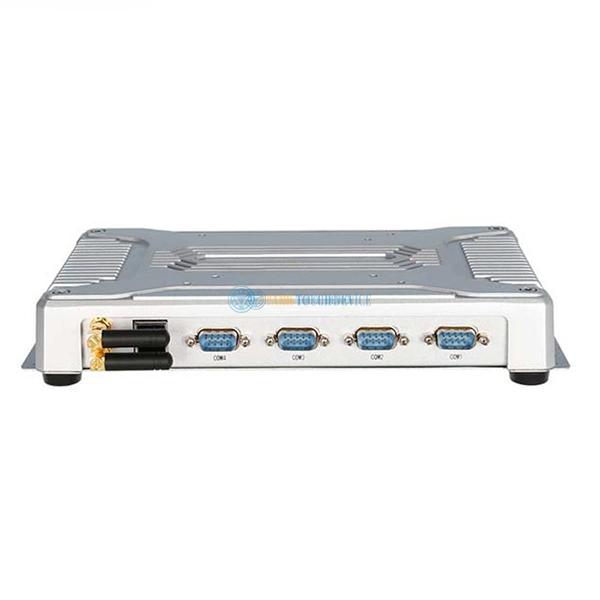
Significance of CPU Clock Speed in Industrial Settings
The CPU clock speed, often measured in gigahertz (GHz), represents the number of cycles per second that the CPU can execute. In industrial control applications, where real - time data processing and precise control are essential, a higher clock speed can offer several advantages.
Faster Data Processing
Industrial control systems frequently deal with large volumes of data from sensors, actuators, and other connected devices. A CPU with a higher clock speed can process this data more rapidly, enabling quicker decision - making and response times. For example, in a manufacturing line, a high - clock - speed CPU can analyze sensor readings in real - time to detect anomalies and adjust production parameters immediately, reducing the risk of defects and downtime.
Improved Multitasking Capability
Industrial control computers often run multiple applications simultaneously, such as data acquisition, process control, and monitoring. A higher CPU clock speed allows the computer to handle these multiple tasks more efficiently, switching between them seamlessly without significant performance degradation. This is particularly important in complex industrial environments where different processes need to be coordinated and managed concurrently.
Enhanced System Responsiveness
In applications where user interaction is involved, such as human - machine interfaces (HMIs), a high - clock - speed CPU ensures that the system responds quickly to user inputs. This improves the overall user experience and allows operators to control and monitor industrial processes more effectively. For instance, in a power plant control room, a responsive HMI powered by a fast CPU enables operators to make adjustments to the system parameters promptly, ensuring stable power generation.
Factors Influencing CPU Clock Speed Selection
When choosing a CPU clock speed for an industrial control computer, several factors need to be considered to ensure optimal performance and cost - effectiveness.
Workload Requirements
The nature and complexity of the industrial tasks that the computer will perform are the primary determinants of the required CPU clock speed. Simple monitoring and data logging applications may not require a very high - clock - speed CPU, while complex process control systems with real - time optimization algorithms will benefit from a faster processor. Analyzing the specific workload requirements, such as the number of input/output operations, the complexity of the control algorithms, and the data processing volume, can help in selecting an appropriate clock speed.
Power Consumption and Heat Dissipation
Higher CPU clock speeds generally result in increased power consumption and heat generation. In industrial environments, where power efficiency and thermal management are important considerations, it is necessary to balance the performance requirements with the power and heat constraints. A CPU with a very high clock speed may consume excessive power, leading to higher operating costs and potential thermal issues that could affect the reliability and lifespan of the computer. Therefore, it is essential to choose a clock speed that meets the performance needs while keeping power consumption and heat dissipation within acceptable limits.
Future Scalability
Industrial control systems are often designed to operate for long periods, and their requirements may change over time. Selecting a CPU with a clock speed that allows for future scalability can be a wise decision. As new features are added or the workload increases, a CPU with some headroom in terms of clock speed can accommodate these changes without requiring a complete system upgrade. This can save costs in the long run and ensure that the industrial control computer remains relevant and capable of handling evolving industrial demands.
Clock Speed Optimization Techniques for Industrial Control Computers
To maximize the performance of industrial control computers based on their CPU clock speed, several optimization techniques can be employed.
Software Optimization
Optimizing the software running on the industrial control computer can significantly improve its performance, even with a given CPU clock speed. This includes optimizing the control algorithms to reduce the number of computational steps, using efficient data structures, and minimizing unnecessary system calls. Additionally, compiling the software with appropriate optimization flags can help the compiler generate more efficient machine code, taking better advantage of the CPU's architecture and clock speed.
Task Scheduling and Prioritization
Effective task scheduling and prioritization can ensure that critical industrial tasks are given priority and executed promptly, even in a multi - tasking environment. By assigning higher priorities to time - sensitive tasks, such as real - time control loops, the CPU can allocate more processing time to these tasks, improving their responsiveness. This can be achieved through the use of real - time operating systems (RTOS) or task scheduling algorithms that take into account the deadlines and importance of different tasks.
Thermal Management
As mentioned earlier, higher CPU clock speeds generate more heat, which can affect the performance and reliability of the industrial control computer. Implementing proper thermal management techniques, such as using efficient cooling systems (e.g., heat sinks, fans, or liquid cooling), can help maintain the CPU temperature within safe limits. This allows the CPU to operate at its maximum clock speed without thermal throttling, which reduces the clock speed to prevent overheating. Additionally, monitoring the CPU temperature in real - time and adjusting the clock speed or fan speed accordingly can further optimize the system's performance and reliability.
In conclusion, the CPU clock speed is a critical parameter in industrial control computers that influences their performance, power consumption, and scalability. By understanding the significance of clock speed, considering the relevant factors during selection, and employing optimization techniques, industrial operators can ensure that their control computers operate efficiently and effectively, meeting the demands of modern industrial processes.