Welcome STARK TOUCH DEVICE!


Solutions
Analysis of Fault Logs for Industrial Control Computers
Industrial Control Computer Fault Log Analysis: Uncovering System Issues for Improved Reliability
In the complex landscape of industrial automation, industrial control computers serve as the backbone, orchestrating critical processes and ensuring seamless operations. However, like any sophisticated system, they are prone to occasional faults and malfunctions. Effective fault log analysis is a vital tool for diagnosing these issues, identifying root causes, and implementing corrective actions to enhance system reliability and minimize downtime.
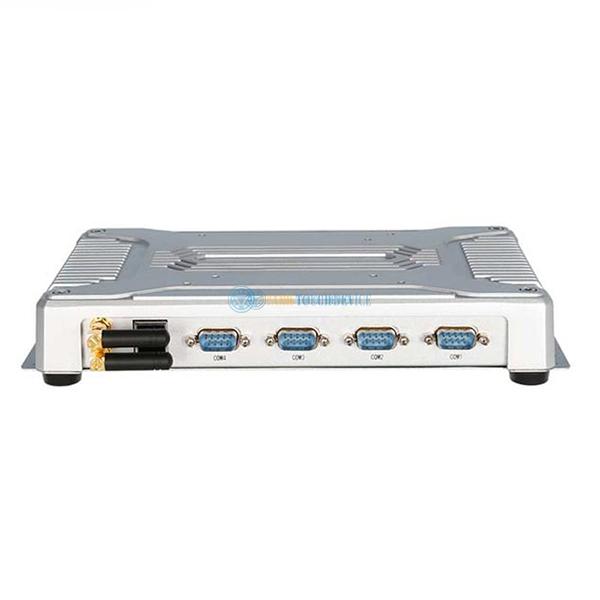
The Importance of Fault Logs in Industrial Control Systems
Fault logs are detailed records of errors, warnings, and anomalies encountered by an industrial control computer during its operation. These logs capture essential information such as the time of occurrence, the nature of the fault, and any associated system parameters or states. By systematically analyzing these logs, engineers and technicians can gain valuable insights into the health and performance of the control system.
Fault logs play a crucial role in several aspects of industrial control system maintenance. They help in identifying recurring issues, tracking the frequency and severity of faults, and assessing the impact of faults on overall system performance. Moreover, fault logs serve as a historical record that can be invaluable during troubleshooting, system upgrades, or forensic analysis in the event of a major incident.
Key Steps in Fault Log Analysis for Industrial Control Computers
1. Data Collection and Preprocessing
The first step in fault log analysis involves collecting fault logs from the industrial control computer and preprocessing them to ensure consistency and accuracy. This may include converting logs from different formats into a unified format, removing duplicate entries, and correcting any data entry errors. Preprocessing also involves filtering out irrelevant or non-critical information to focus on the most significant faults.
During data collection, it's essential to ensure that the logs capture a comprehensive set of parameters related to the fault. This includes not only the error code or message but also system status indicators, input/output values, and environmental conditions at the time of the fault. Such detailed information can greatly facilitate the identification of the root cause.
2. Fault Pattern Recognition and Categorization
Once the fault logs are preprocessed, the next step is to analyze them for patterns and trends. This involves identifying recurring faults, grouping similar faults together, and categorizing them based on their nature and impact. For example, faults can be categorized into hardware-related issues (such as component failures or power supply problems), software-related issues (like bugs or configuration errors), or communication-related issues (such as network disruptions or protocol mismatches).
Pattern recognition can be facilitated by using data visualization techniques, such as time-series plots or frequency distributions, to highlight trends and anomalies in the fault data. Additionally, machine learning algorithms can be employed to automatically detect patterns and classify faults based on historical data, improving the efficiency and accuracy of the analysis process.
3. Root Cause Analysis and Corrective Action Planning
After identifying fault patterns and categories, the focus shifts to determining the root causes of the faults. This requires a deep dive into the system architecture, component specifications, and operational procedures to understand how and why the faults are occurring. Root cause analysis may involve reviewing system documentation, conducting interviews with personnel involved in system operation and maintenance, and performing diagnostic tests on affected components.
Once the root causes are identified, the next step is to develop and implement corrective actions to prevent similar faults from occurring in the future. Corrective actions can range from simple fixes, such as replacing a faulty component or updating software, to more complex solutions, such as redesigning system architecture or implementing redundancy measures. It's crucial to document the corrective actions taken and monitor their effectiveness over time to ensure that the faults are truly resolved.
Advanced Techniques for Enhancing Fault Log Analysis
Leveraging Predictive Analytics
Predictive analytics techniques can be applied to fault log data to forecast potential future faults before they occur. By analyzing historical fault patterns and system performance data, predictive models can identify early warning signs of impending faults, allowing maintenance teams to take proactive measures to prevent system failures. This approach, known as predictive maintenance, can significantly reduce downtime and maintenance costs while improving overall system reliability.
Integrating Fault Log Analysis with Other Maintenance Tools
Fault log analysis should not be viewed as an isolated activity but rather as an integral part of a broader maintenance strategy. Integrating fault log analysis with other maintenance tools, such as condition monitoring systems, asset management software, and work order management systems, can provide a more holistic view of system health and facilitate coordinated maintenance efforts. For example, fault log data can be used to trigger automated work orders for preventive maintenance tasks or to update asset health records in the asset management system.
Continuous Improvement through Feedback Loops
Finally, it's essential to establish a feedback loop for continuous improvement in fault log analysis. This involves regularly reviewing the effectiveness of the analysis process, identifying areas for improvement, and implementing changes to enhance the accuracy and efficiency of fault detection and diagnosis. Additionally, feedback from maintenance personnel and system operators should be incorporated into the analysis process to ensure that it remains aligned with the practical needs and challenges of industrial control system maintenance.
By following these key steps and leveraging advanced techniques, industrial control computer fault log analysis can become a powerful tool for improving system reliability, reducing downtime, and optimizing maintenance efforts in industrial automation environments.