Welcome STARK TOUCH DEVICE!


Solutions
Transmission rate of the network interface of the industrial control computer
Network Interface Transmission Rates for Industrial Control Computers
Industrial control computers rely heavily on network interfaces to connect with various devices and systems within industrial environments. Understanding the transmission rates of these network interfaces is crucial for ensuring efficient data transfer and system performance.
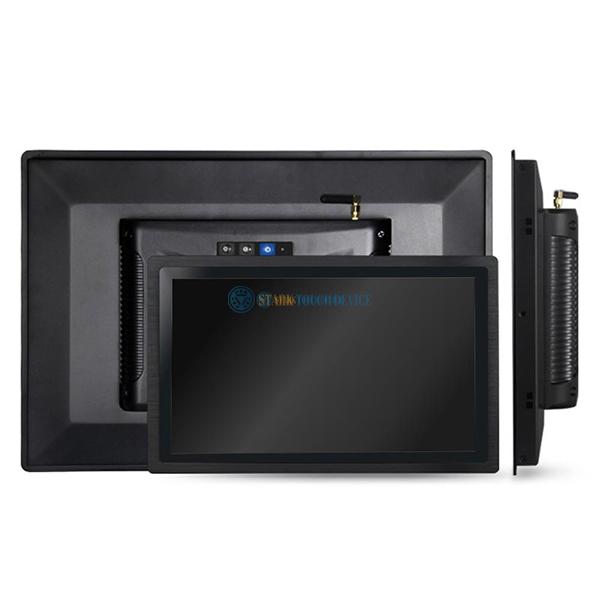
Common Network Interface Types and Their Transmission Rates
Ethernet Interfaces: Ethernet is the most widely used network interface in industrial control computers. It supports various transmission rates, including 10 Mbps, 100 Mbps, and 1 Gbps (Gigabit Ethernet). In modern industrial settings, Gigabit Ethernet is often the standard, providing fast and reliable data transfer for applications such as real-time monitoring, control, and data acquisition.
Fast Ethernet: Fast Ethernet, with a transmission rate of 100 Mbps, was once a popular choice for industrial networks. It offers a significant speed improvement over traditional 10 Mbps Ethernet and is still used in some legacy systems or applications where high-speed data transfer is not critical.
Gigabit Ethernet: Gigabit Ethernet, operating at 1 Gbps, is now the preferred choice for many industrial control applications. It enables faster data transfer, reducing latency and improving overall system responsiveness. This is particularly important in applications that require real-time data processing, such as motion control, robotics, and high-speed manufacturing processes.
Factors Influencing Network Interface Transmission Rates
Cable Type: The type of cable used can significantly impact the transmission rate of a network interface. For example, Cat 5e cables can support up to 1 Gbps, while Cat 6 cables can handle up to 10 Gbps under ideal conditions. In industrial environments, where cables may be subject to harsh conditions, selecting the appropriate cable type is essential for maintaining optimal transmission rates.
Network Topology: The network topology, or the layout of the network, can also affect transmission rates. For instance, a star topology, where each device is connected directly to a central switch, can provide better performance than a bus topology, where devices are connected in a linear fashion. In industrial control systems, a well-designed network topology can help minimize data collisions and ensure efficient data transfer.
Interference and Noise: Industrial environments are often filled with electromagnetic interference (EMI) and noise, which can degrade network signals and reduce transmission rates. To mitigate these issues, industrial control computers may use shielded cables, fiber optic connections, or other techniques to protect the network signals and maintain high transmission rates.
High-Speed Network Interfaces for Advanced Industrial Applications
10 Gigabit Ethernet: For applications that demand even higher data transfer rates, 10 Gigabit Ethernet (10 Gbps) is an option. It is suitable for data-intensive applications such as video surveillance, large-scale data acquisition, and high-performance computing in industrial settings. However, implementing 10 Gigabit Ethernet requires compatible hardware, including switches, network interface cards, and cables.
Fiber Optic Interfaces: Fiber optic network interfaces offer several advantages over traditional copper-based interfaces, including higher transmission rates, longer transmission distances, and immunity to EMI. In industrial control computers, fiber optic interfaces can be used for applications that require high-speed, reliable data transfer over long distances, such as connecting remote sensors or control devices in a large manufacturing facility.